India Holidays and Leave Policy for Offshore Teams

See how Findigs, Accompany Health, Veramatic and Podifi built their teams.
Real teams, real results, from faster hiring to lasting retention.
Quick look:
| Leave policy in India starts with three national holidays: Republic Day, Independence Day, and Gandhi Jayanti. Each state then sets its own minimum festival holidays and statutory leave through its Shops and Establishments Act, so the rules depend on where the office is. Most employers add optional holidays so people can mark the festivals that matter to them. Plan deadlines around major festivals such as Diwali, and shape benefits around family, since health cover for spouses, children and parents is highly valued. |
|---|
Managing a global workforce requires paying attention to cultural details in as nuanced a manner as possible.
When working with an offshore team in India, understanding holidays and cultural nuances is crucial for ensuring engagement, satisfaction, and productivity. Indian holidays are deeply tied to traditions, family, and celebrations.
For companies building offshore teams in India, getting holidays and benefits right is a non-negotiable.
Let's explore how to thoughtfully design office calendars and benefits packages while respecting cultural sensitivities.
Why Indian holidays and cultural sensitivities matter for offshore teams
Holidays in India are unlike those in many Western countries. They often include extended family celebrations, religious rituals, and region-specific observances. A thoughtful approach to holidays and cultural practices shows your offshore team that you value their heritage.
- Boosts Morale: Employees who feel understood and respected are more motivated
- Enhances Retention: A benefits package tailored to their culture increases loyalty
- Improves Productivity: A well-designed calendar minimizes disruptions caused by unexpected absences during major festivals
Key Indian holidays to include in office calendars
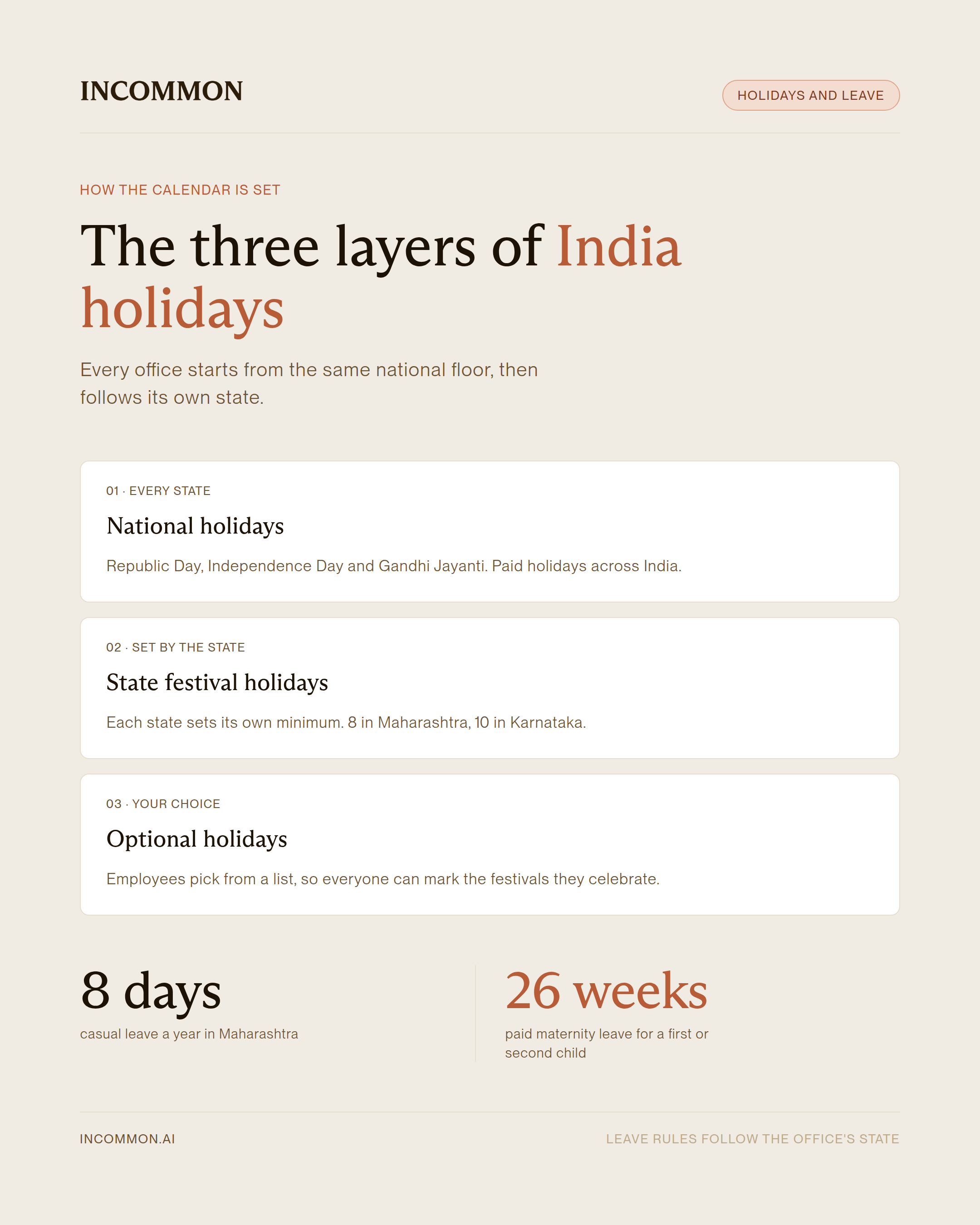
India's diversity is reflected in its holidays. Here are the major ones your offshore team review should account for:
1. National holidays
These are observed across India, and employees typically expect the day off:
- Republic Day (January 26)
- Independence Day (August 15)
- Gandhi Jayanti (October 2)
2. Religious festivals
Religious holidays vary based on regions and faiths. Major festivals include:
- Diwali: The Hindu festival of lights, often requiring a multi-day break
- Eid-ul-Fitr: Celebrated by Muslims, marking the end of Ramadan
- Christmas: While India's Christian population is smaller, it's a widely observed holiday
- Navratri/Durga Puja: Celebrations vary by region, but they're significant
3. Regional holidays
States in India celebrate unique holidays, and each state sets its own minimum number of paid festival holidays: eight in Maharashtra and ten in Karnataka. For example:
- Pongal (Tamil Nadu): A harvest festival in January
- Bihu (Assam): Another harvest festival celebrated in April
- Onam (Kerala): A ten-day harvest festival in August or September
How to build an inclusive office calendar for Indian offshore teams
Designing an office calendar for your offshore team in India doesn't have to be overwhelming. Here's how to get it right:
1. Offer flexibility with optional holidays
Instead of attempting to include every regional and religious holiday, provide a list of optional holidays.
- Employees can choose a certain number of days to take off based on their personal preferences
- This ensures inclusivity while keeping operations smooth
2. Prioritize major festivals
Some holidays, like Diwali or Eid, are so universally celebrated that they should be non-negotiable public holidays for your offshore team.
3. Plan around holiday clusters
Many Indian holidays fall close to each other, creating opportunities for extended leaves.
- For example, Diwali often involves multiple days of festivities
- Anticipate this and adjust deadlines or workload to avoid disruptions
Cultural sensitivities to consider in benefits packages
When designing benefits packages for Indian offshore teams, going beyond the basics can make all the difference.
1. Family-centric benefits
Family plays a central role in Indian culture, so benefits that extend to employees' families are highly appreciated.
- Health Insurance: Include coverage for spouses, children, and parents
- Family Leave: Consider additional leave for family emergencies or caregiving
2. Festive gifts
Many Indian employers offer gifts and organize celebrations during major festivals, particularly Diwali.
- A small gift shows thoughtfulness and respect for traditions
3. Leave policies
Indian employees appreciate flexibility in leave policies, especially during religious and cultural events.
- Statutory Leave: Leave rules are set by each state's Shops and Establishments Act, so they depend on where the office is. In Maharashtra, for example, workers get 8 days of casual leave a year and earned leave of 1 day for every 20 days worked. Check your state's Act before setting a company policy
- Maternity and Paternity Leave: Indian law requires 26 weeks of paid maternity leave for a first or second child, and 12 weeks after that. Paternity leave is not required for private employers, so it is a policy choice
- Bereavement Leave: Culturally, extended family relationships are significant, so provide leave for such occasions
How offshore team reviews can incorporate cultural sensitivities
Conducting a fair offshore team review requires considering cultural nuances. Here's how you can make the process more inclusive:
1. Align goals with holidays
Recognize that productivity might dip during festive seasons.
- Adjust KPIs and deadlines around major holidays like Diwali or Eid
- Acknowledge the extra effort employees put in before or after holidays to meet targets
2. Celebrate successes publicly
Indian employees value public recognition.
- Celebrate their achievements during team meetings or in newsletters
- Use festivals as an opportunity to thank the team collectively for their contributions
3. Be mindful of religious practices
Religious practices like fasting during Ramadan or abstaining from certain activities during Navratri can impact work schedules.
- Be flexible with working hours during such times
- Ensure that team events or meetings don't inadvertently clash with religious observances
Challenges in balancing Indian holidays with global operations
Accommodating Indian holidays can be a task for first-time offshore employers. Here's how to handle them:
1. Managing deadlines across time zones
When Indian teams take extended breaks for festivals, it might affect global deadlines.
- Plan work cycles well in advance, factoring in holiday schedules
- Share workload among other teams to minimize disruptions
2. Avoiding perceived favoritism
Global employees might feel that Indian offshore teams receive "extra" holidays.
- Communicate openly about why flexibility is necessary for cultural harmony
- Offer optional holidays for all employees to balance perceptions
3. Balancing inclusivity and operational needs
It's impossible to accommodate every single holiday without affecting business continuity.
- Use optional holidays as a middle ground to ensure inclusivity without operational strain
Setting holiday and leave policies for a new India team? We can help.
Making cultural sensitivity a core strength: a conclusion
Indian holidays and cultural practices offer companies an opportunity to show they value diversity.
By incorporating thoughtful policies into office calendars and benefits packages, businesses can create a positive work environment for their offshore teams.
When offshore employees feel seen and respected, they bring their best to work. Cultural sensitivity is one of the best ways to create well-knit global teams.
So, take the time to understand the cultural calendar, offer flexibility where needed, and create benefits that go beyond the basics. Your offshore team in India will thank you with their loyalty and exceptional work.
Frequently asked questions
Is there a national leave policy in India for private companies?
No single national leave law covers private companies. Leave and paid festival holidays are set by each state's Shops and Establishments Act, so the rules depend on where the office is. Maternity leave is set nationally.
What are the public holidays in India?
Three national holidays apply across India: Republic Day on 26 January, Independence Day on 15 August and Gandhi Jayanti on 2 October. Each state adds its own minimum number of paid festival holidays, eight in Maharashtra and ten in Karnataka.
How should a company handle regional and religious holidays in India?
Offer a list of optional holidays alongside the fixed ones. Employees choose a set number of days based on the festivals they celebrate, which keeps the calendar inclusive without closing the office for every regional holiday.
Is maternity and paternity leave mandatory in India?
Indian law requires 26 weeks of paid maternity leave for a first or second child, and 12 weeks after that. Paternity leave is not required for private employers, so it is a policy choice.
How do you plan global deadlines around Indian holidays?
Plan work cycles around the festival calendar, especially Diwali, which often runs over several days. Adjust deadlines and KPIs around major festivals, and share workload with other teams where holidays cluster.
What benefits do employees in India value most?
Family-centric benefits are highly valued, especially health insurance that covers spouses, children and parents. Many employers also give festive gifts at Diwali and offer leave for family emergencies and bereavement.
Written by
CEO, InCommon
Piyush Kedia is the CEO of InCommon, a talent infrastructure company that helps US and global enterprises set up and scale Global Capability Centers (GCCs) in India. He works with founders, CTOs, and heads of talent to design smaller, AI native GCC teams that focus on judgment work, not just headcount, so India offices stay senior, stable, and production ready. Before InCommon, Piyush built Blue Vector into a 50 person creative agency serving brands such as Trump Towers, Audi, and Porsche, giving him a front row view of how high performing teams are hired, managed, and grown.